




Year
2024
Deliverables
Strategy UI System E-commerce design Content direction
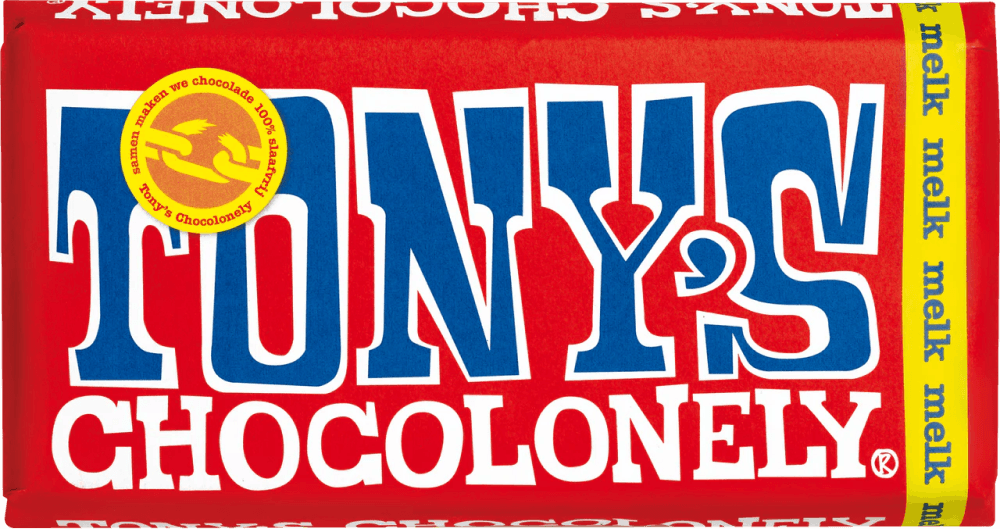
A new digital home and UI system for Tony's Chocolonely, the Amsterdam chocolate brand on a mission to make chocolate 100% slave free.
Year
2024
Deliverables
Strategy UI System E-commerce design Content direction
A new digital home and UI system for Tony's Chocolonely, the Amsterdam chocolate brand on a mission to make chocolate 100% slave free.
Year
2024
Deliverables
Strategy UI System E-commerce design Content direction
A new digital home and UI system for Tony's Chocolonely, the Amsterdam chocolate brand on a mission to make chocolate 100% slave free.
The Challenge
A digital home that matches the bar
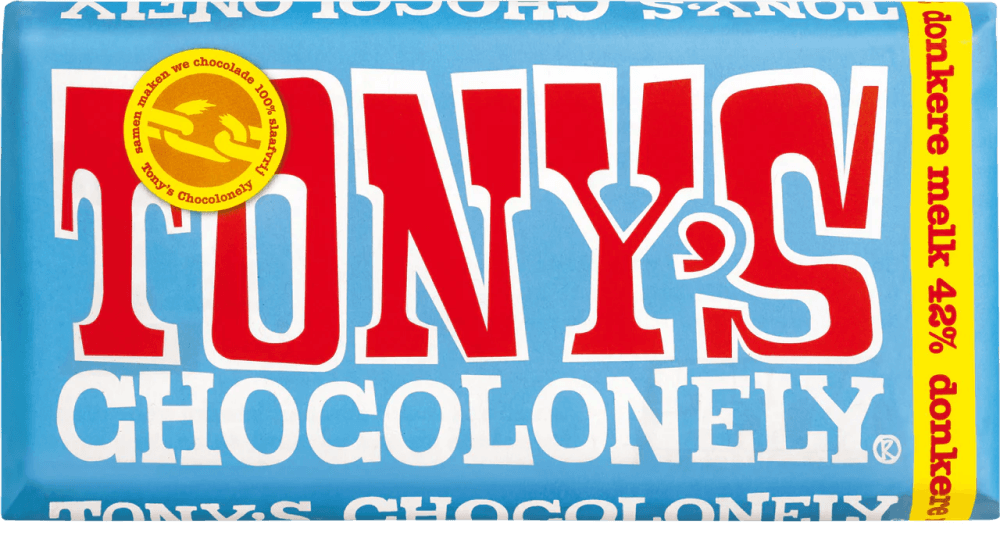
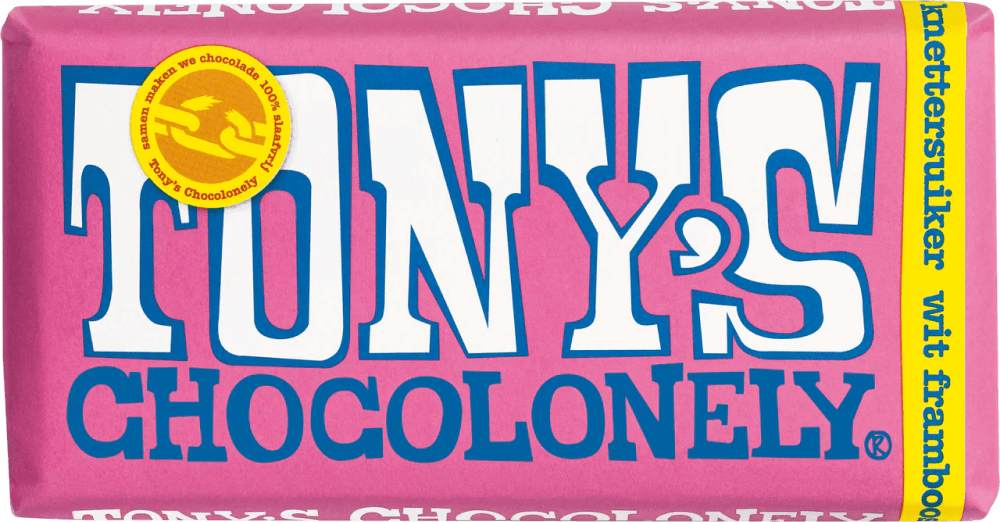
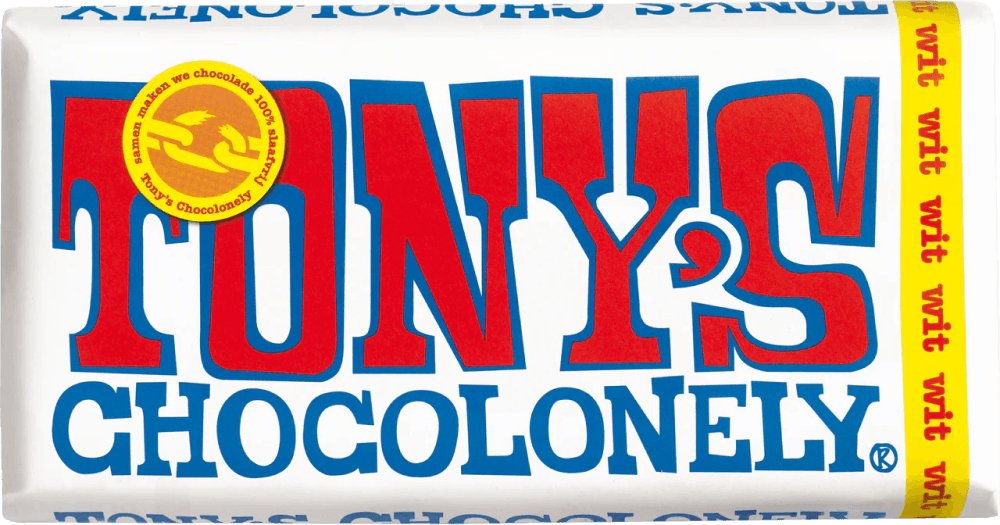
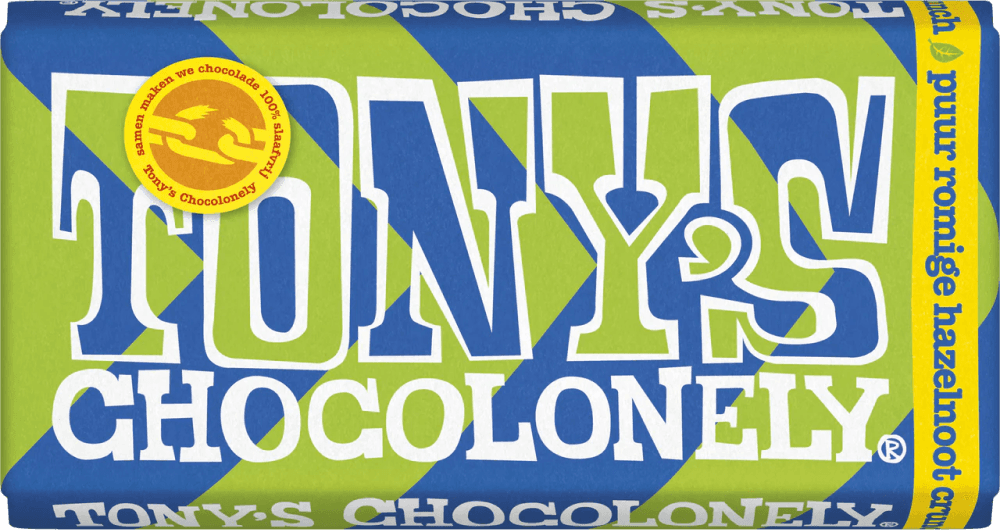
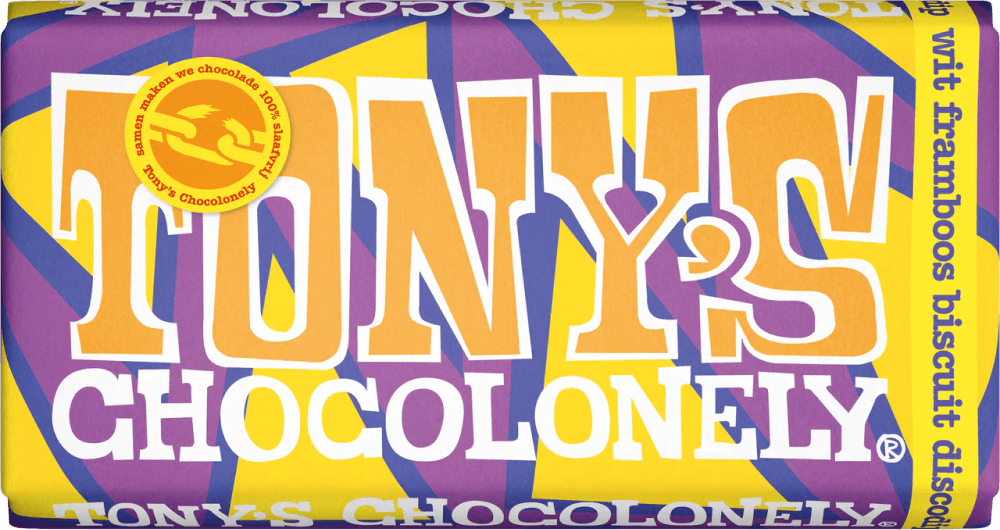
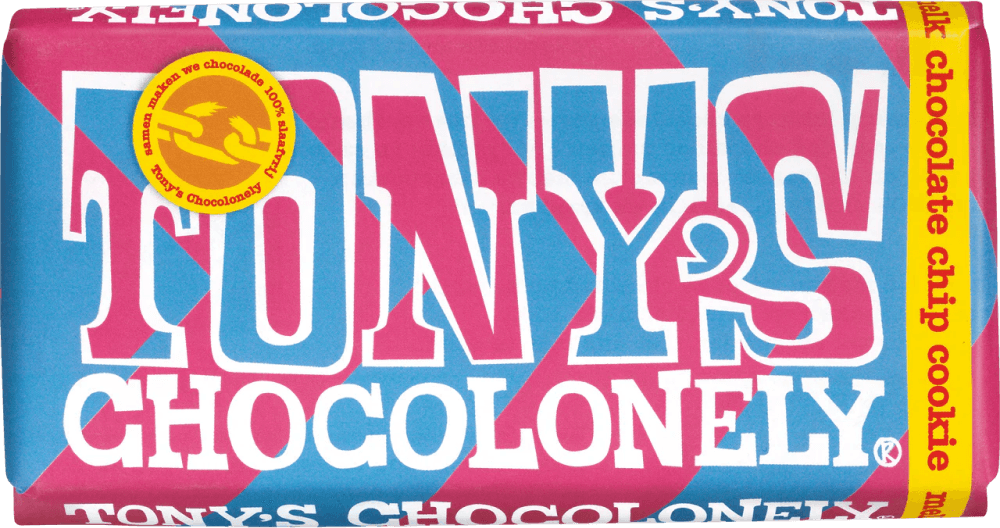
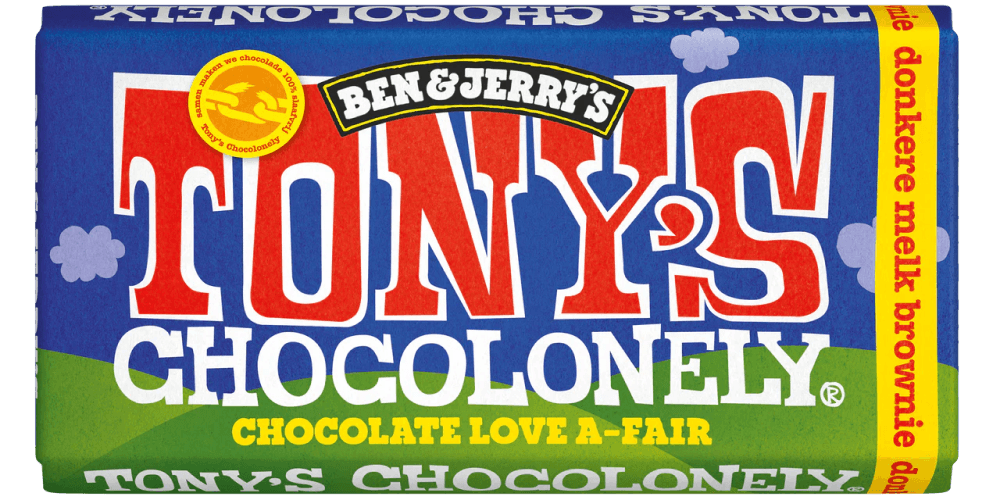
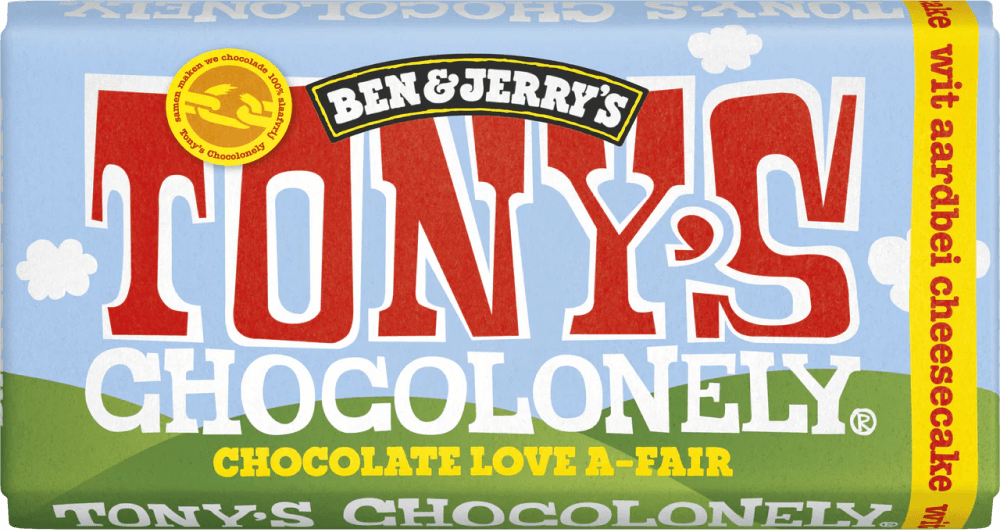
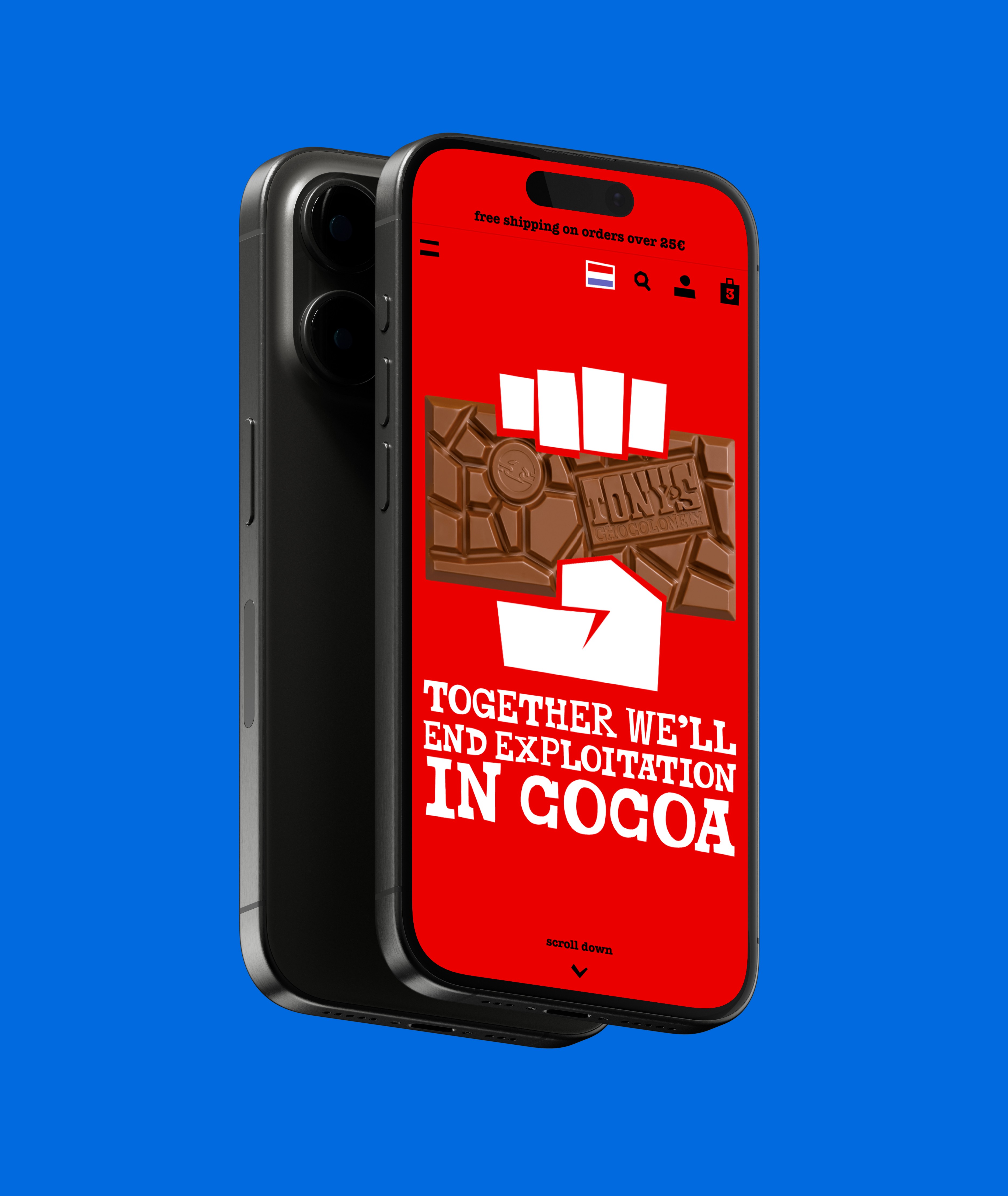
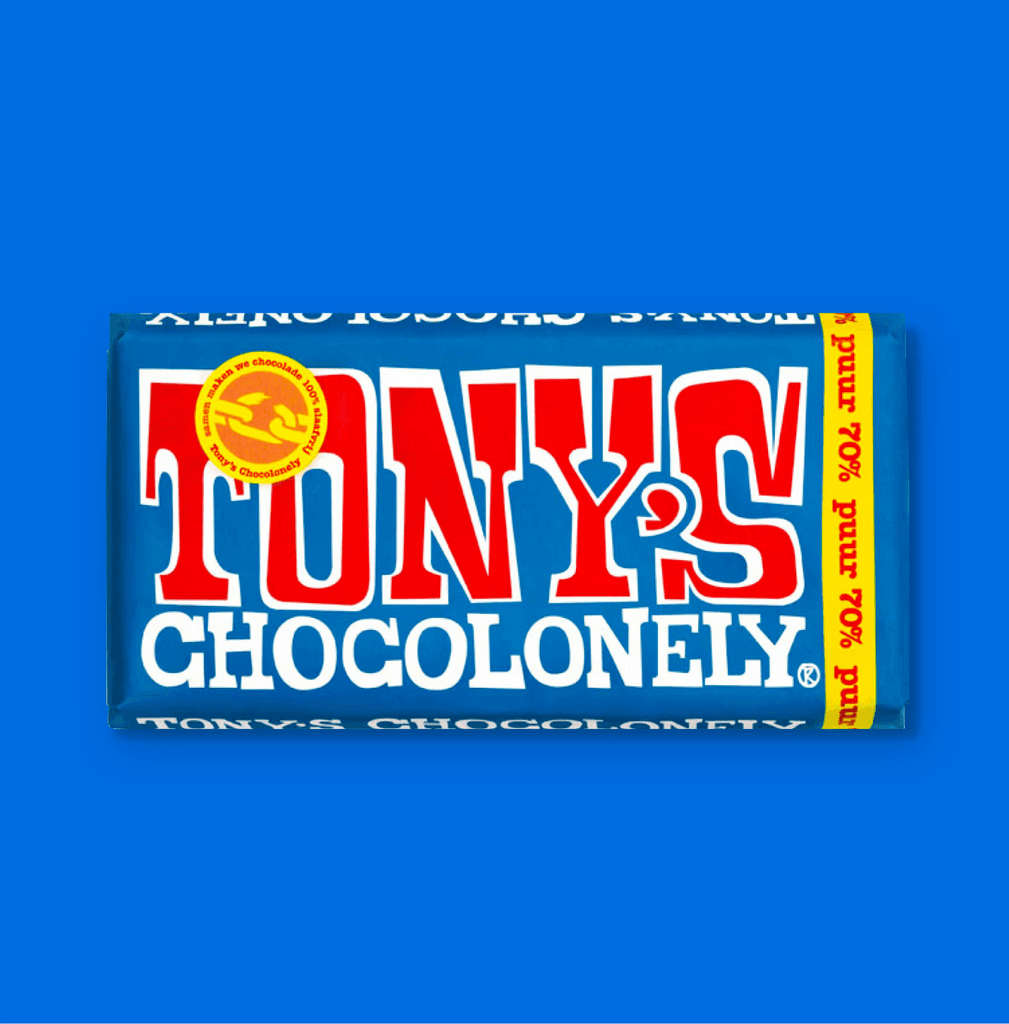
Tony's Chocolonely is one of the most recognizable food brands to come out of the Netherlands. Built around a mission to end exploitation in the cocoa industry, the brand has spent years winning shelves and hearts with its unequal bars, primary colours, and refusal to behave like the rest of the category. The product and the activism were already category leading. The digital home was not. The Chocoshop had to do three things at once. Sell chocolate at scale, carry the mission without lecturing, and feel as confident as a Tony's bar in your hand.
The Solution
A Chocoshop built for scale and mission
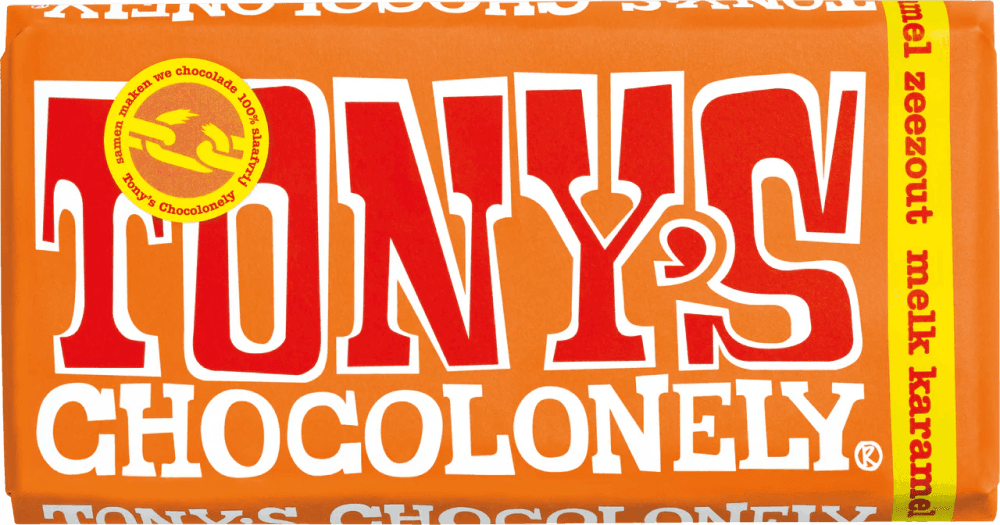
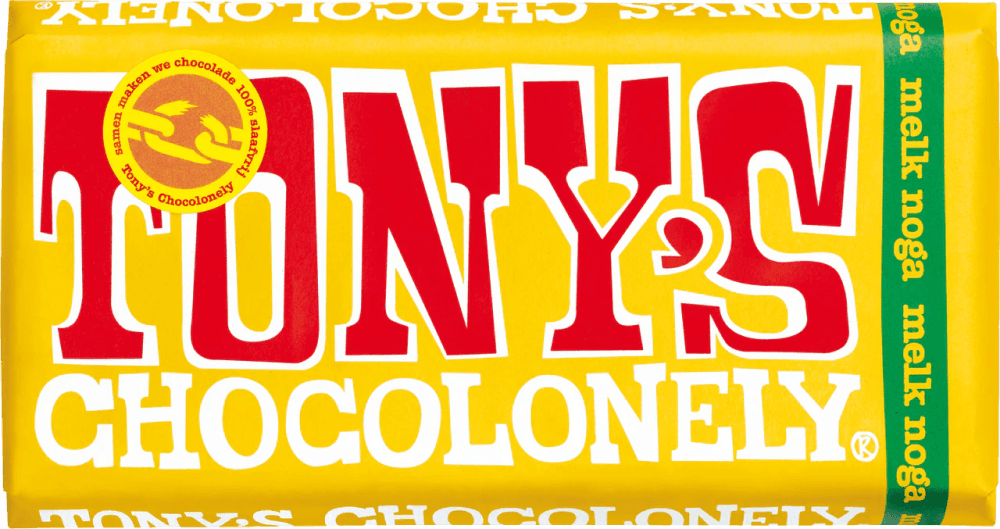
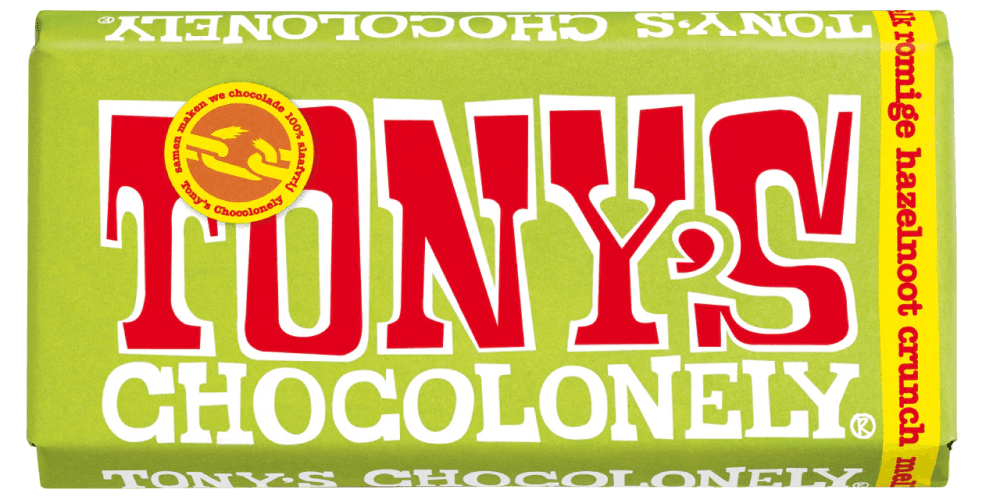
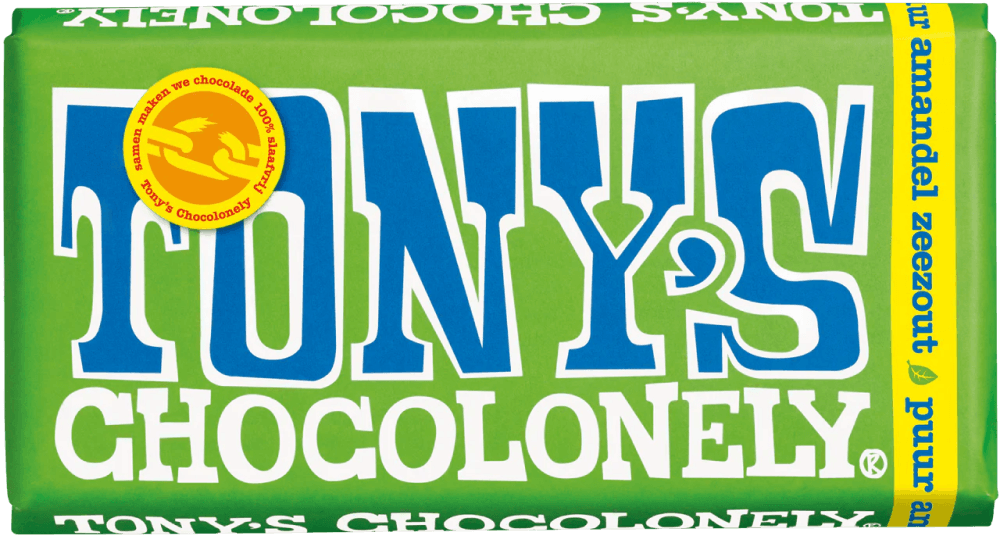
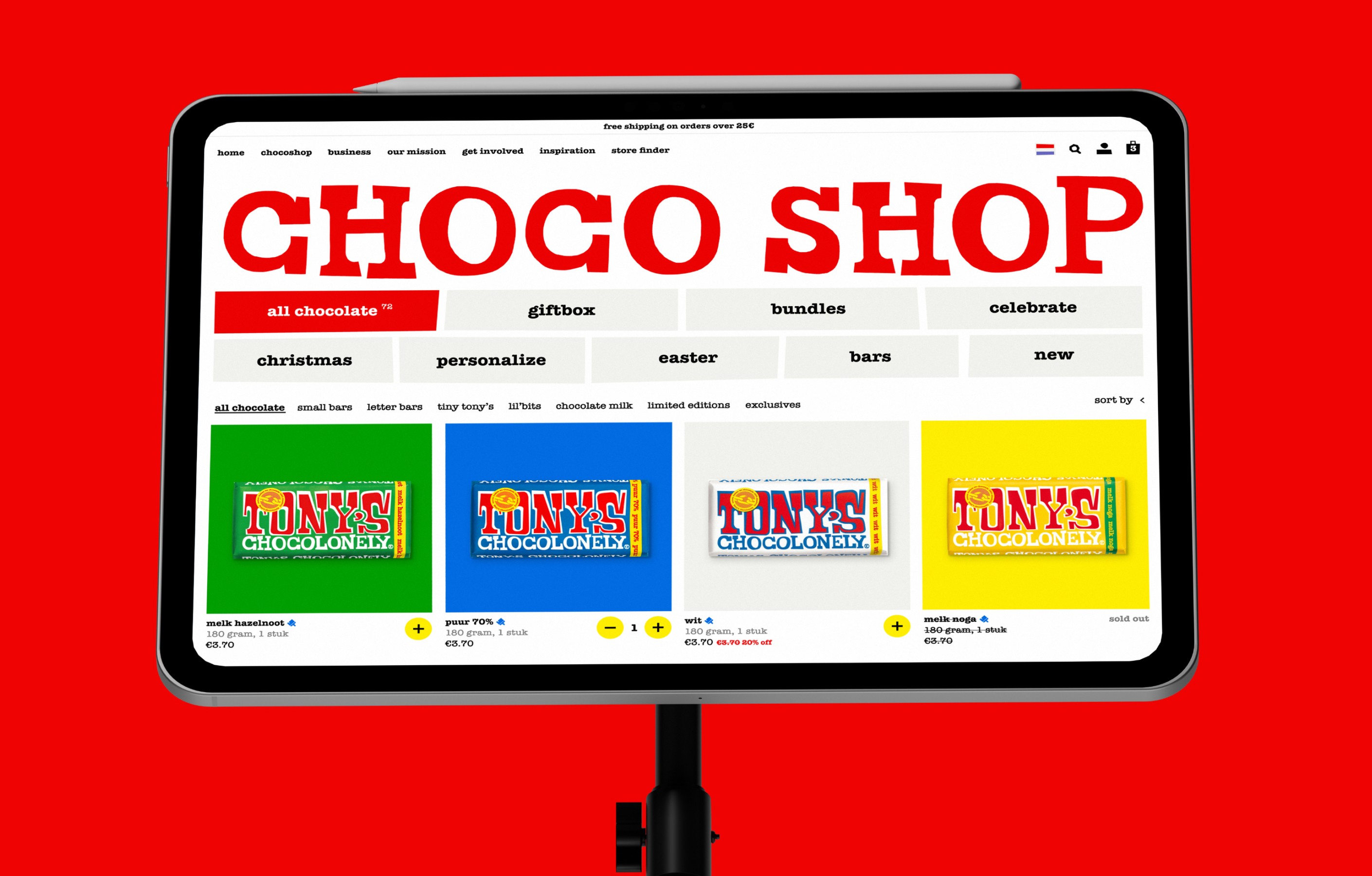
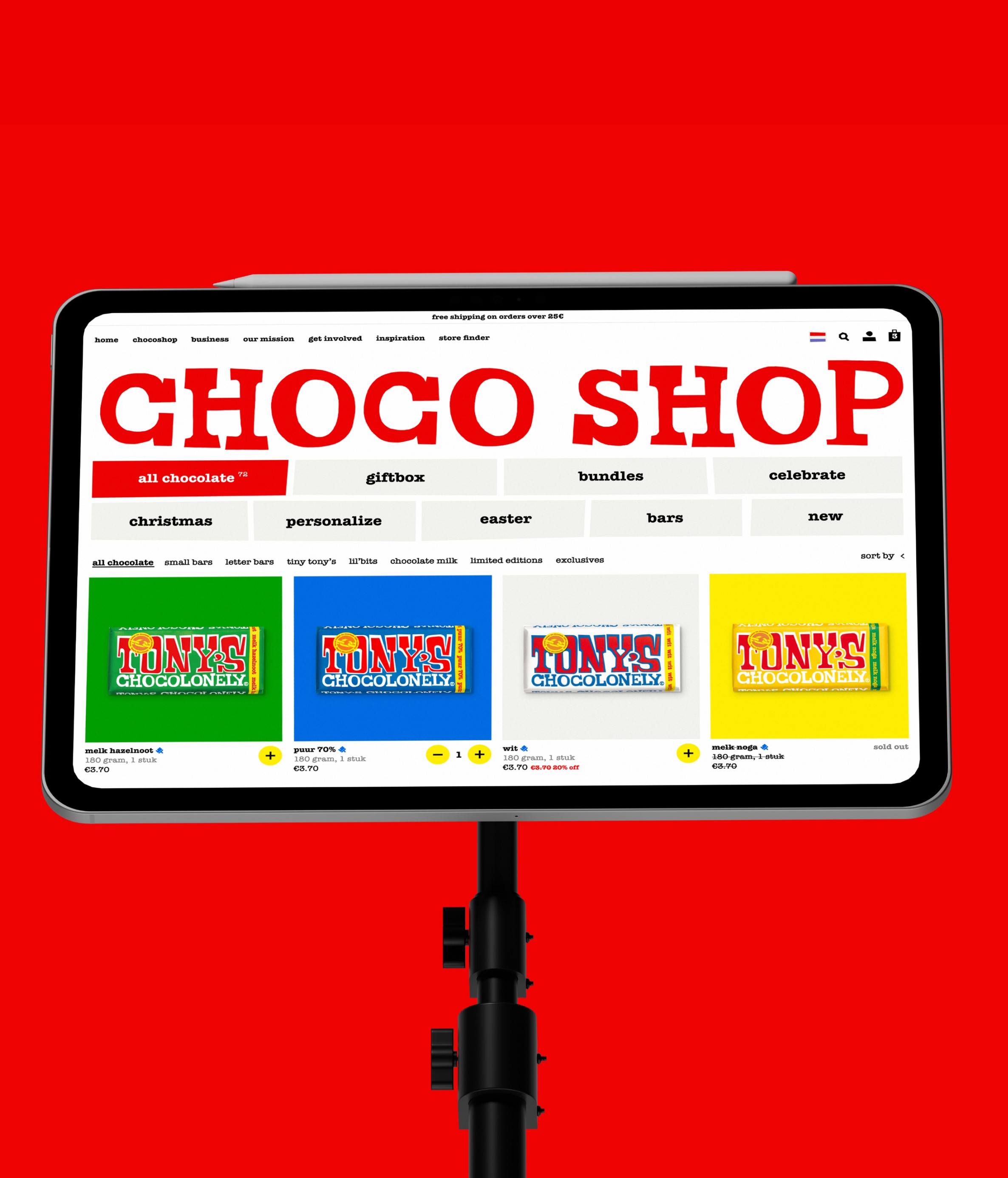
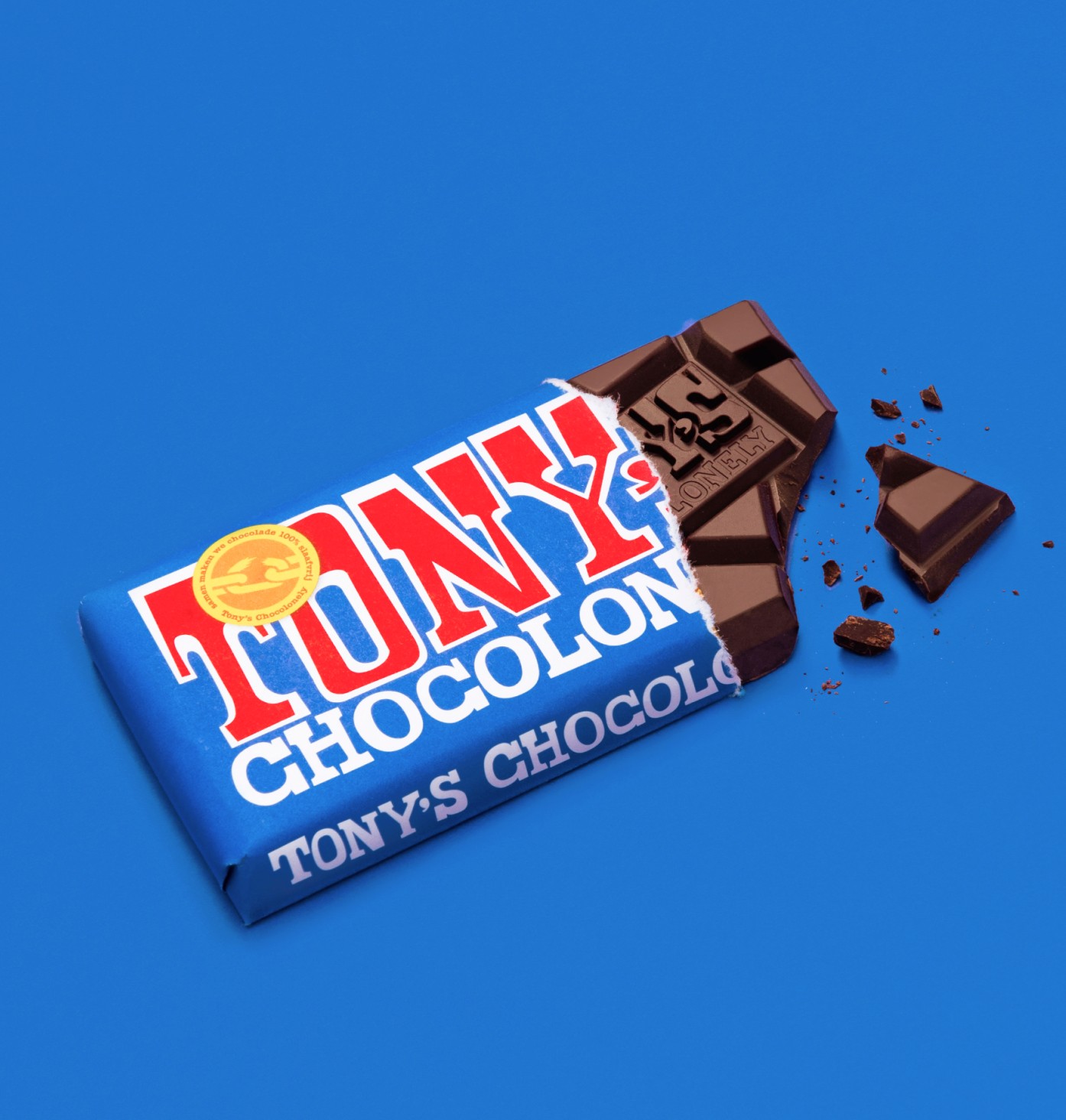
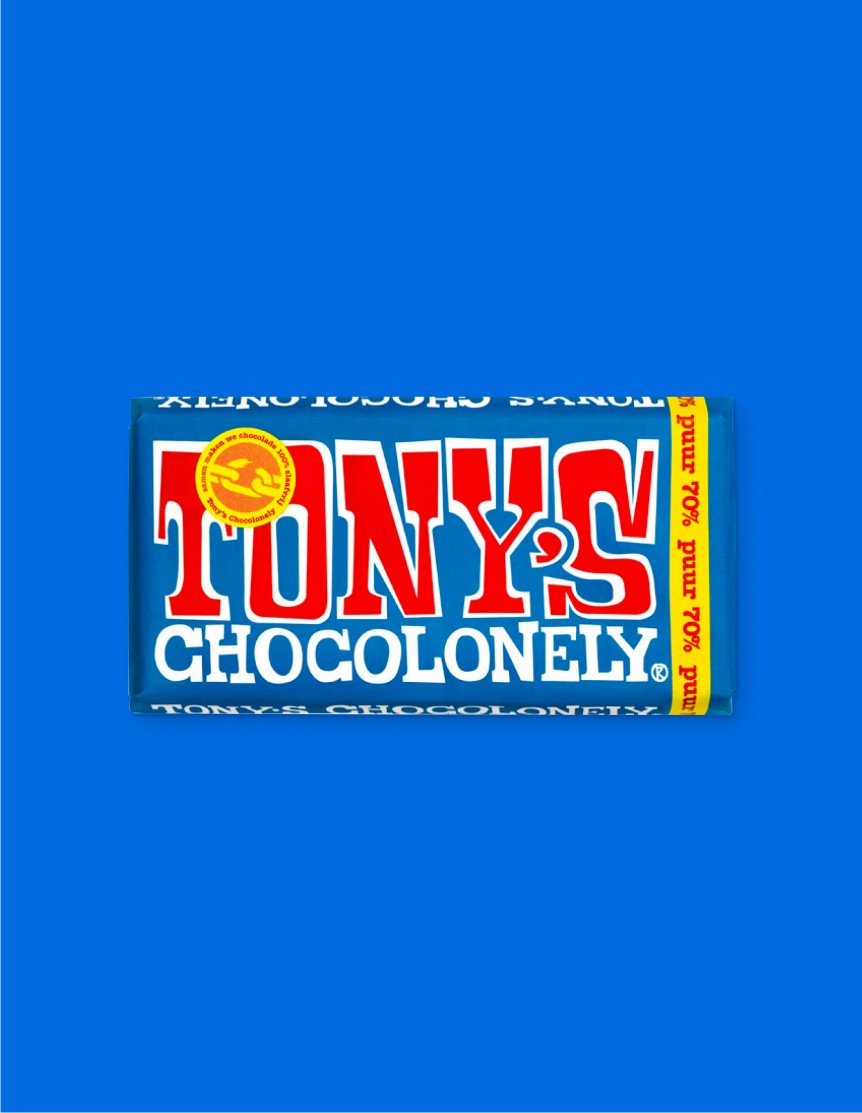
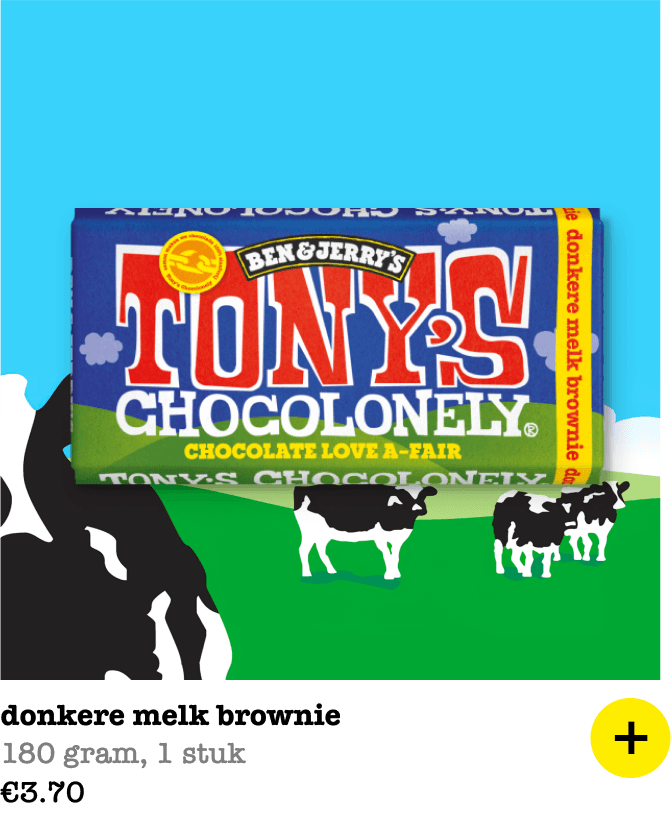
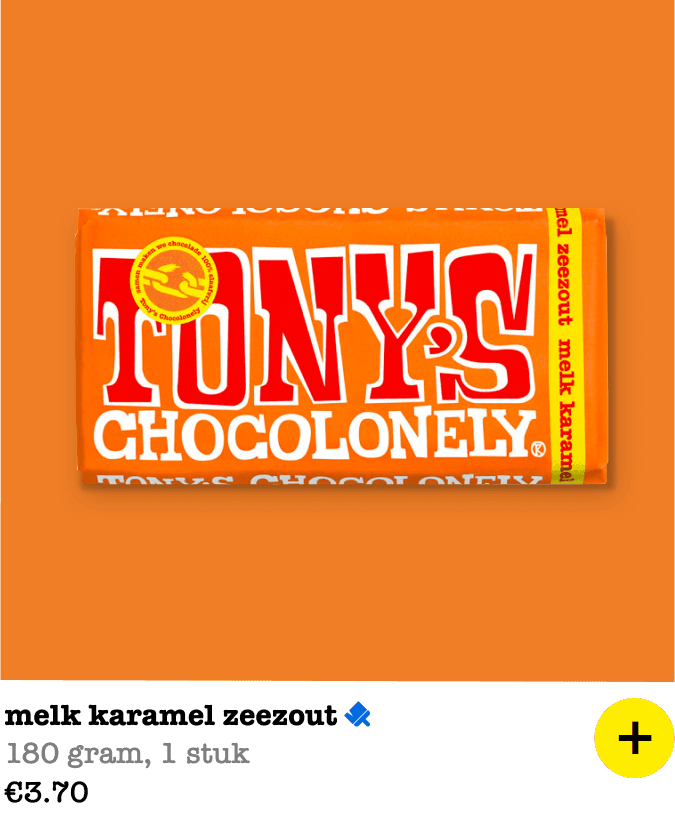
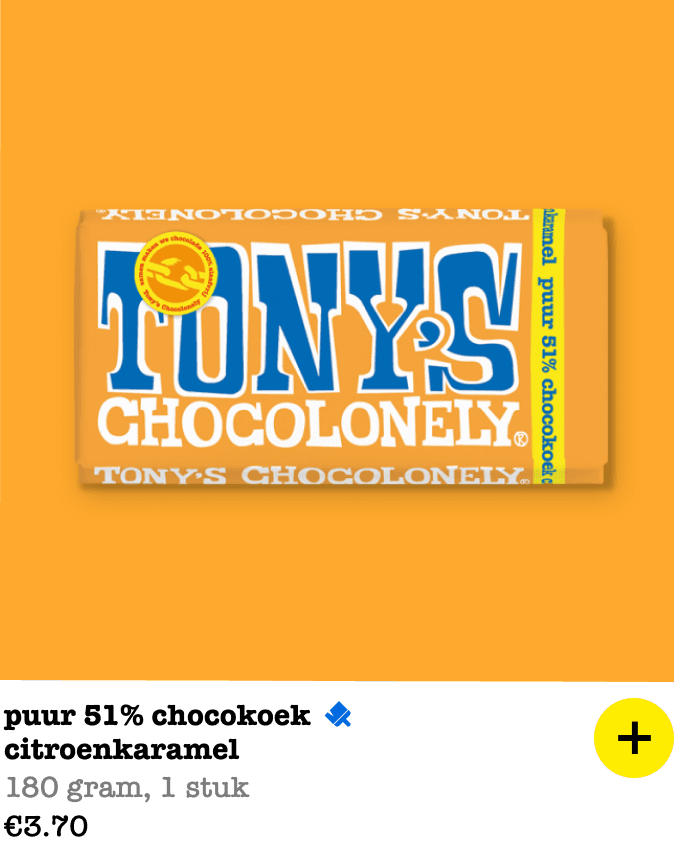
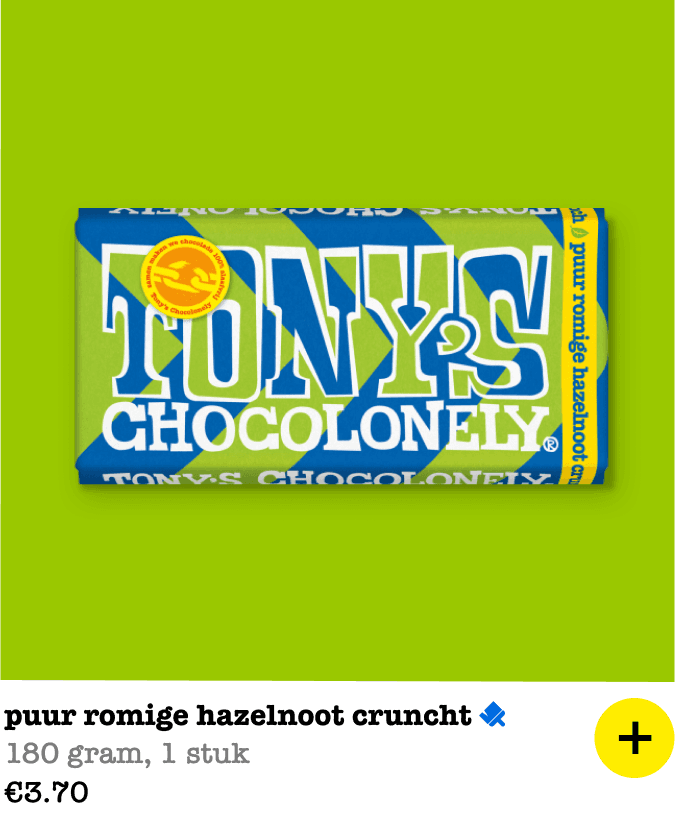
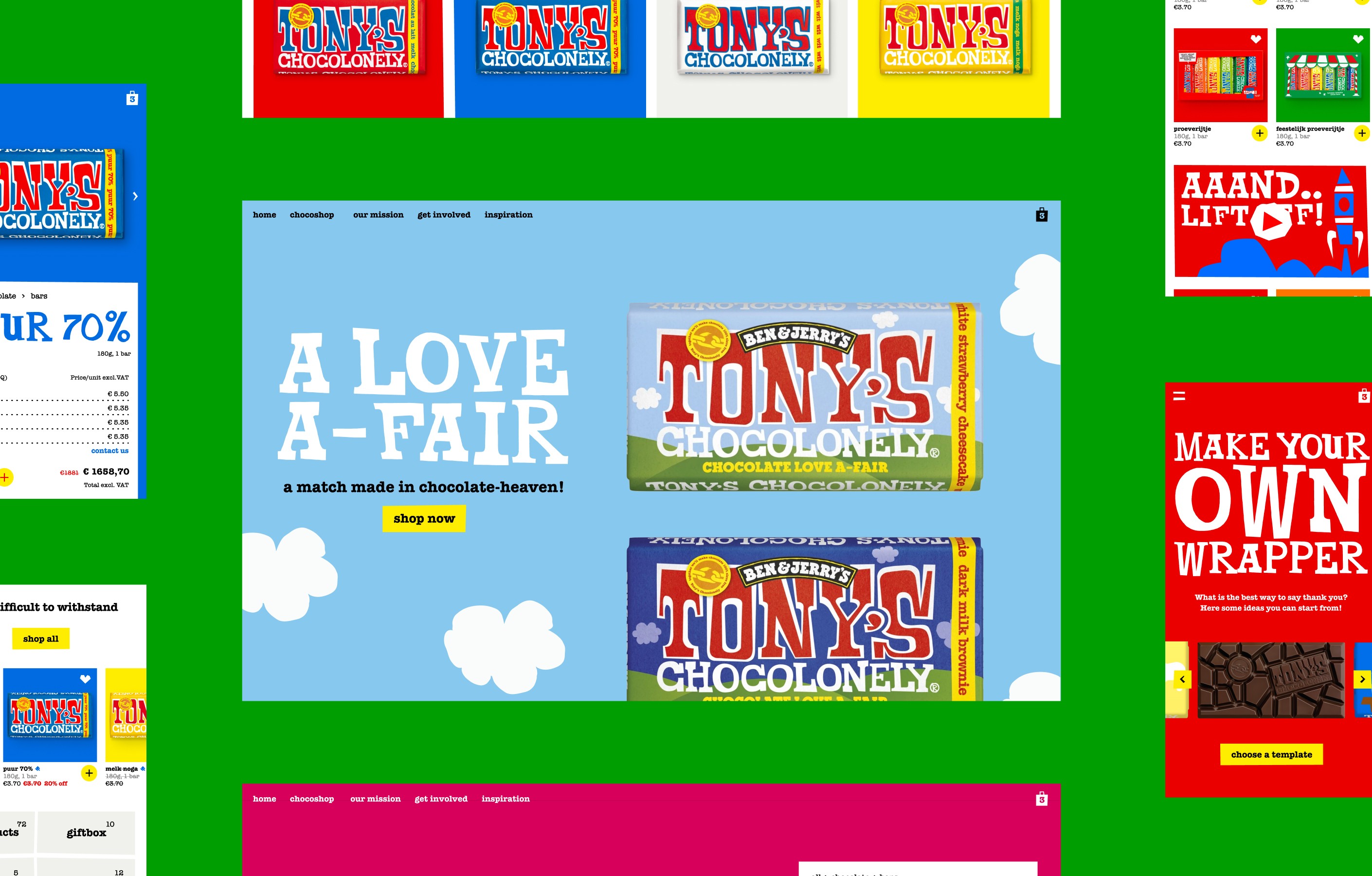
We rebuilt the Chocoshop around one idea. The website should feel like the bar. Loud where it counts, considered everywhere else, and unmistakably Tony's from the first scroll to the checkout. Working with the in-house team in Amsterdam, we shaped a new digital strategy, a complete UI system, and a content direction that gives equal weight to commerce and mission. Chocoletter sets the tone. The unequal bar grid becomes a structural device for layouts. Components are documented, reusable, and built to scale.
The Challenge
A digital home that matches the bar
Tony's Chocolonely is one of the most recognizable food brands to come out of the Netherlands. Built around a mission to end exploitation in the cocoa industry, the brand has spent years winning shelves and hearts with its unequal bars, primary colours, and refusal to behave like the rest of the category. The product and the activism were already category leading. The digital home was not. The Chocoshop had to do three things at once. Sell chocolate at scale, carry the mission without lecturing, and feel as confident as a Tony's bar in your hand.
The Solution
A Chocoshop built for scale and mission
We rebuilt the Chocoshop around one idea. The website should feel like the bar. Loud where it counts, considered everywhere else, and unmistakably Tony's from the first scroll to the checkout. Working with the in-house team in Amsterdam, we shaped a new digital strategy, a complete UI system, and a content direction that gives equal weight to commerce and mission. Chocoletter sets the tone. The unequal bar grid becomes a structural device for layouts. Components are documented, reusable, and built to scale.
The Challenge
A digital home that matches the bar
Tony's Chocolonely is one of the most recognizable food brands to come out of the Netherlands. Built around a mission to end exploitation in the cocoa industry, the brand has spent years winning shelves and hearts with its unequal bars, primary colours, and refusal to behave like the rest of the category. The product and the activism were already category leading. The digital home was not. The Chocoshop had to do three things at once. Sell chocolate at scale, carry the mission without lecturing, and feel as confident as a Tony's bar in your hand.
The Solution
A Chocoshop built for scale and mission
We rebuilt the Chocoshop around one idea. The website should feel like the bar. Loud where it counts, considered everywhere else, and unmistakably Tony's from the first scroll to the checkout. Working with the in-house team in Amsterdam, we shaped a new digital strategy, a complete UI system, and a content direction that gives equal weight to commerce and mission. Chocoletter sets the tone. The unequal bar grid becomes a structural device for layouts. Components are documented, reusable, and built to scale.

0123456789@ABCDEFGHIJKLMNOPQRSTUVWXYZ:;<=>?!"#$%&'()*+,-./
0123456789@ABCDEFGHIJKLMNOPQRSTUVWXYZ:;<=>?!"#$%&'()*+,-./
0123456789@ABCDEFGHIJKLMNOPQRSTUVWXYZ:;<=>?!"#$%&'()*+,-./
Chocoletter, 300px, Tony’s in-house, handcut typeface
Chocoletter, 300px, Tony’s in-house, handcut typeface

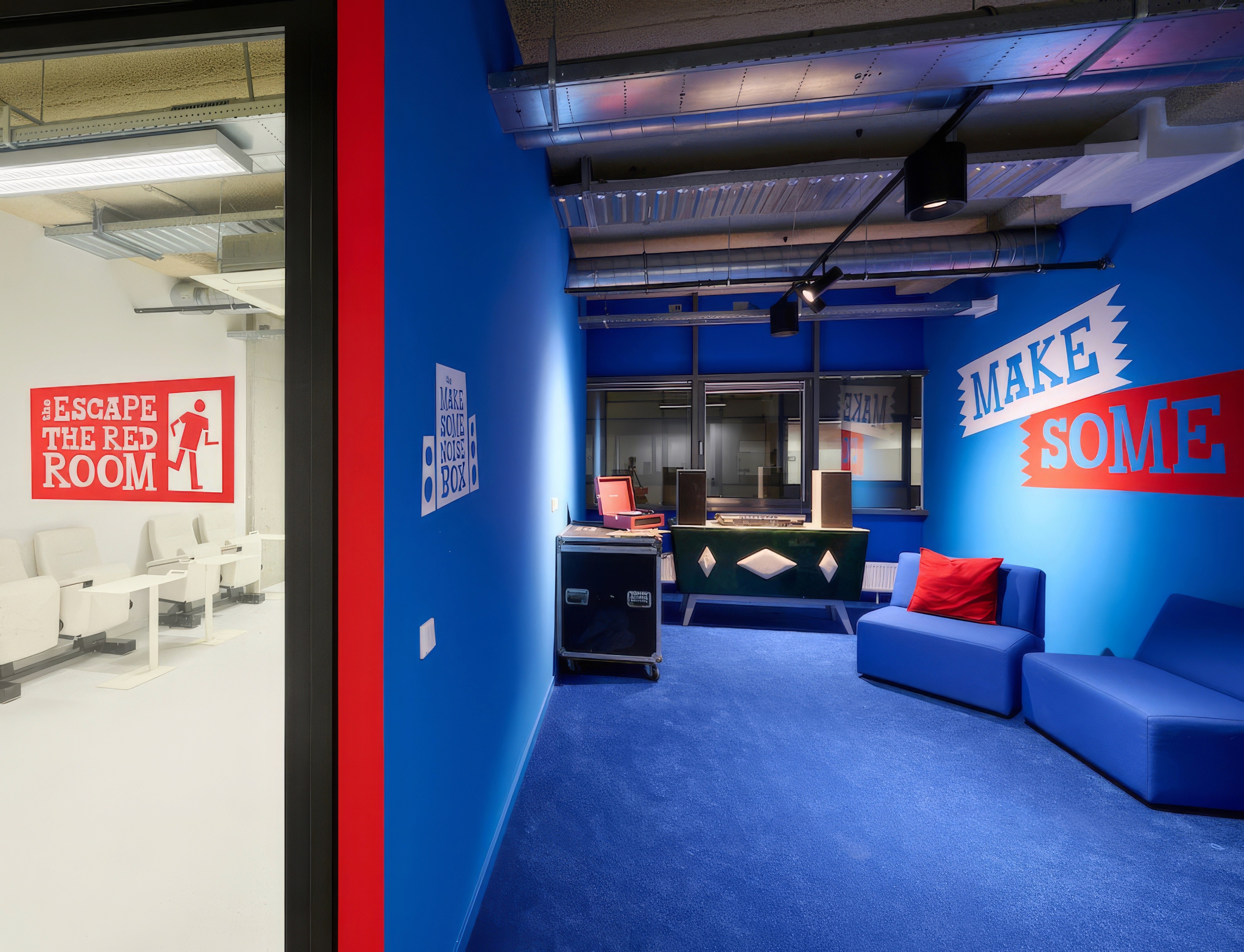
After every meeting we were allowed to take chocolate bars home from the Chocovault. We found out there’s no limit to eating chocolate.
After every meeting we were allowed to take chocolate bars home from the Chocovault. We found out there’s no limit to eating chocolate.
After every meeting we were allowed to take chocolate bars home from the Chocovault. We found out there’s no limit to eating chocolate.













Team
Julian Mollema
Ralph Tilon
Johann Schnettker
Julia Van Haaster
Project Information
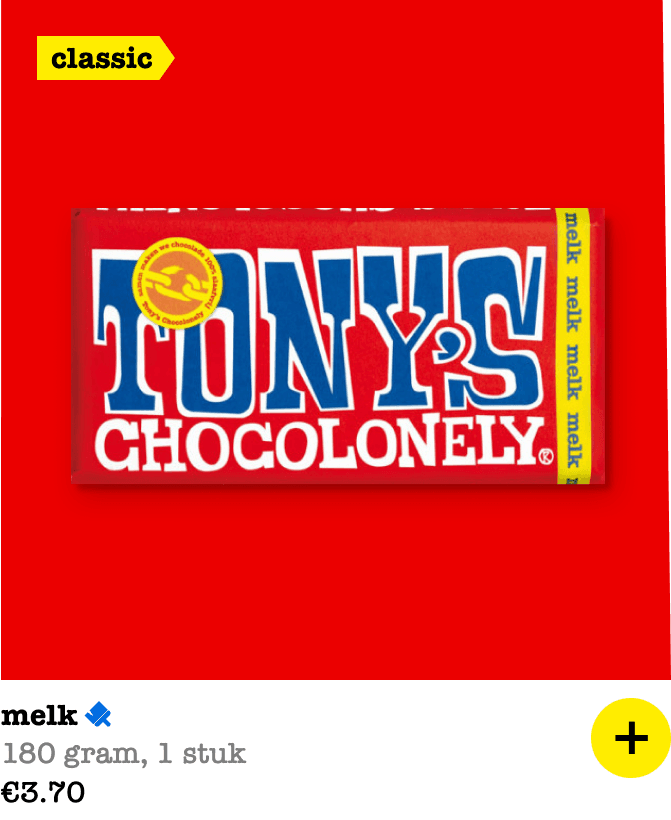
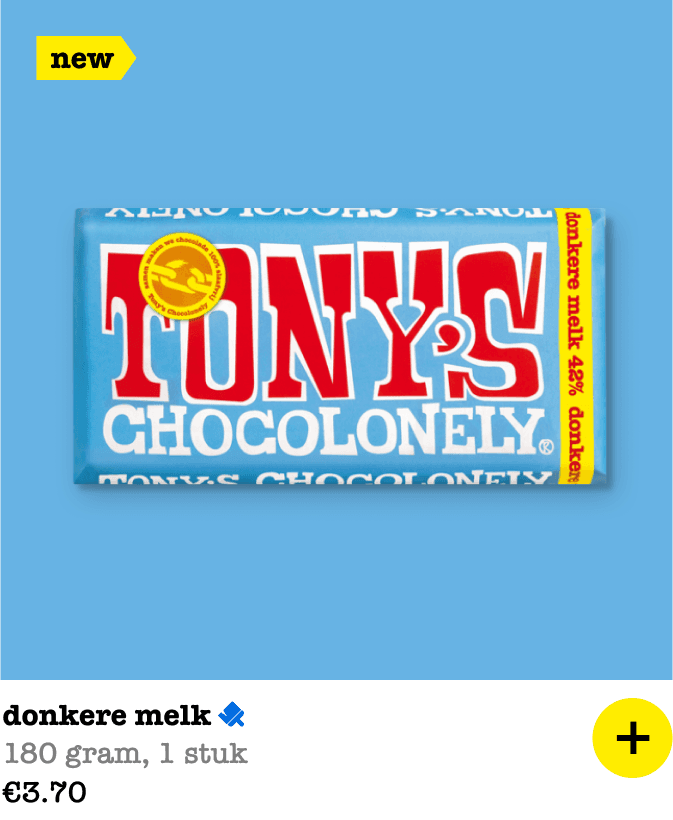
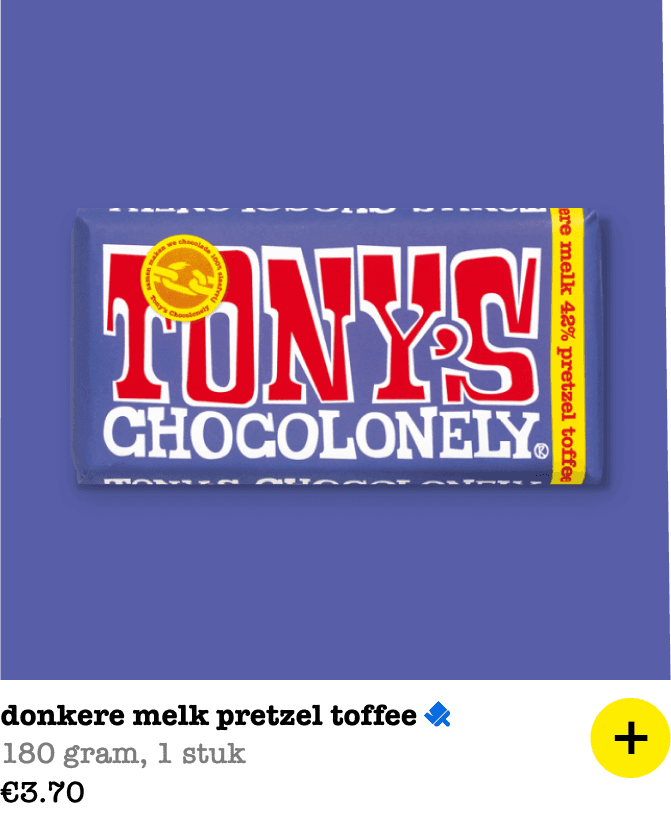
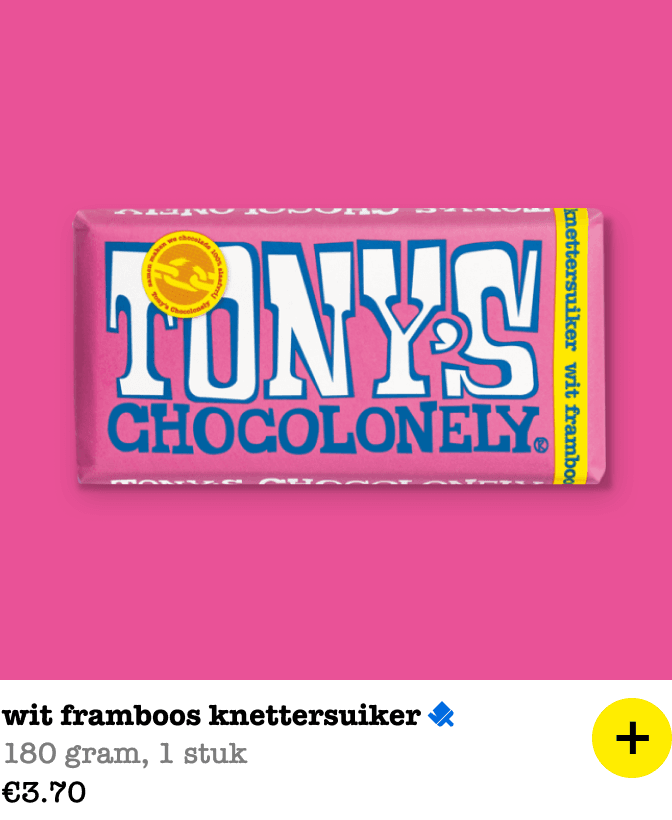
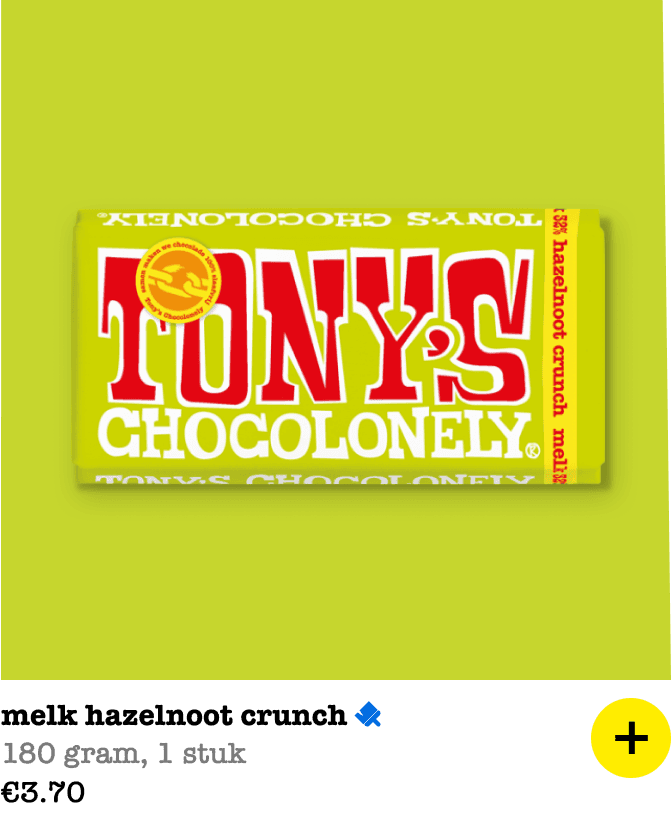
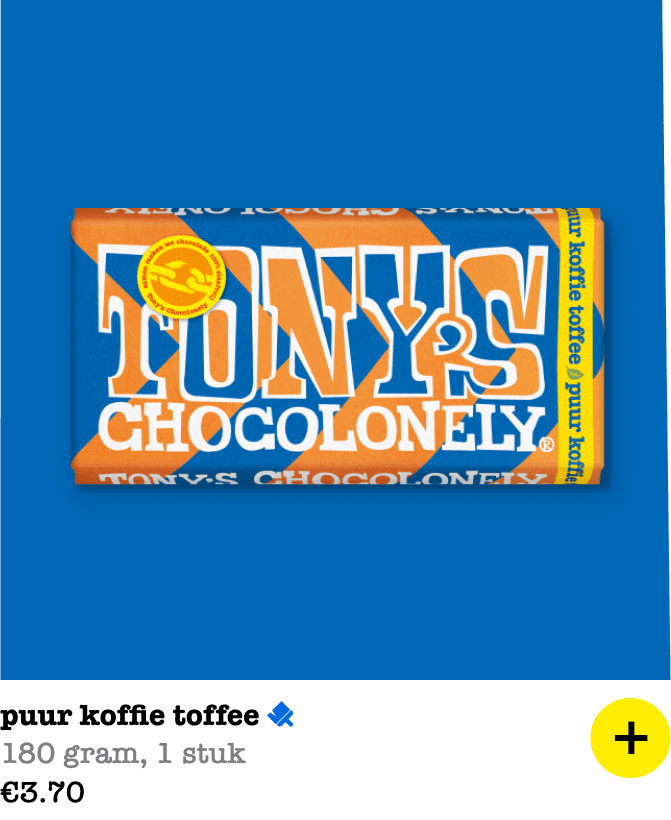
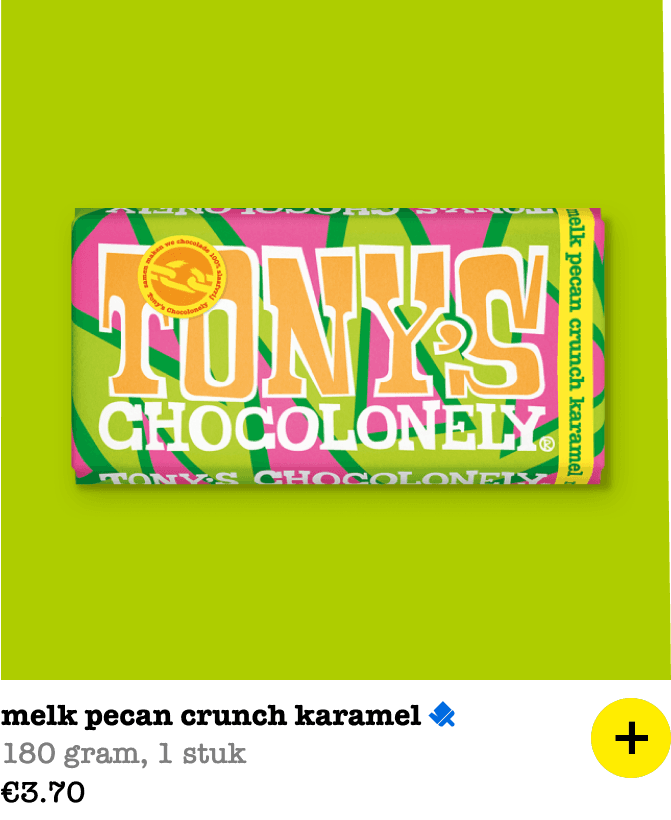
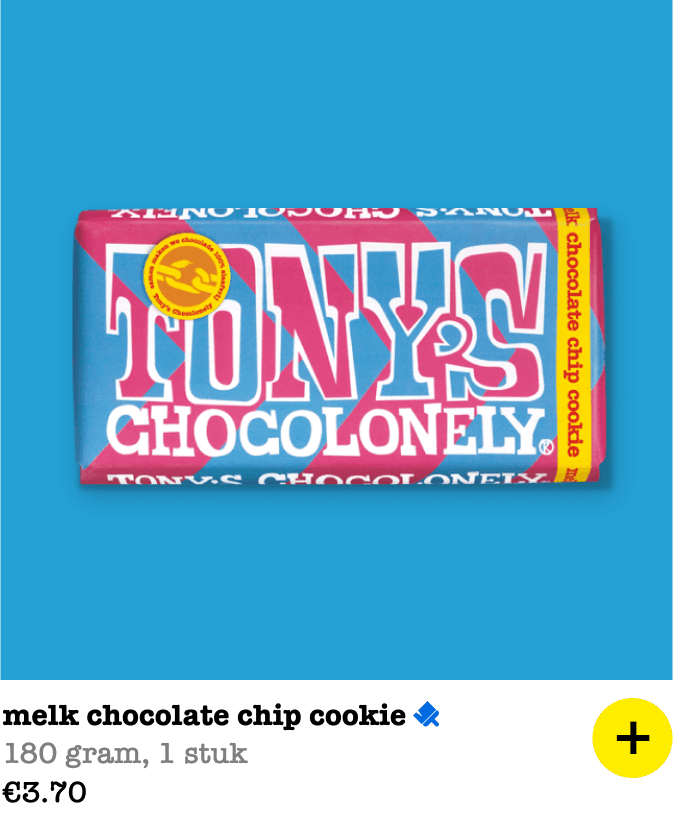
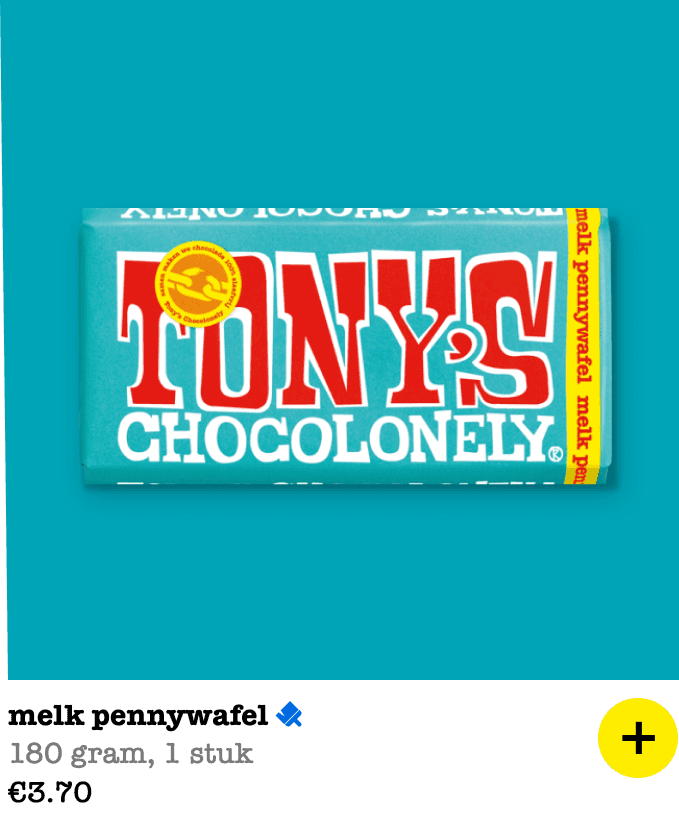
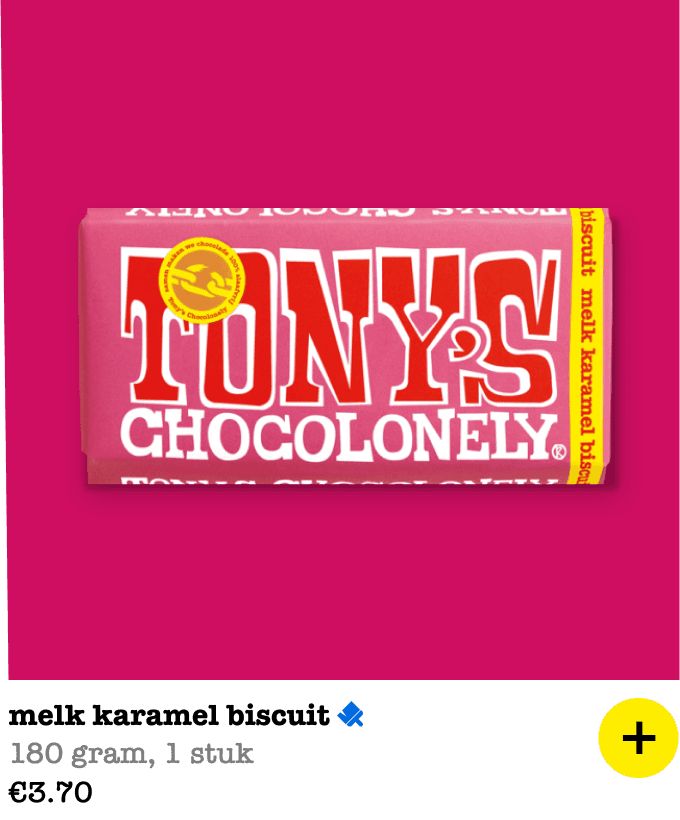
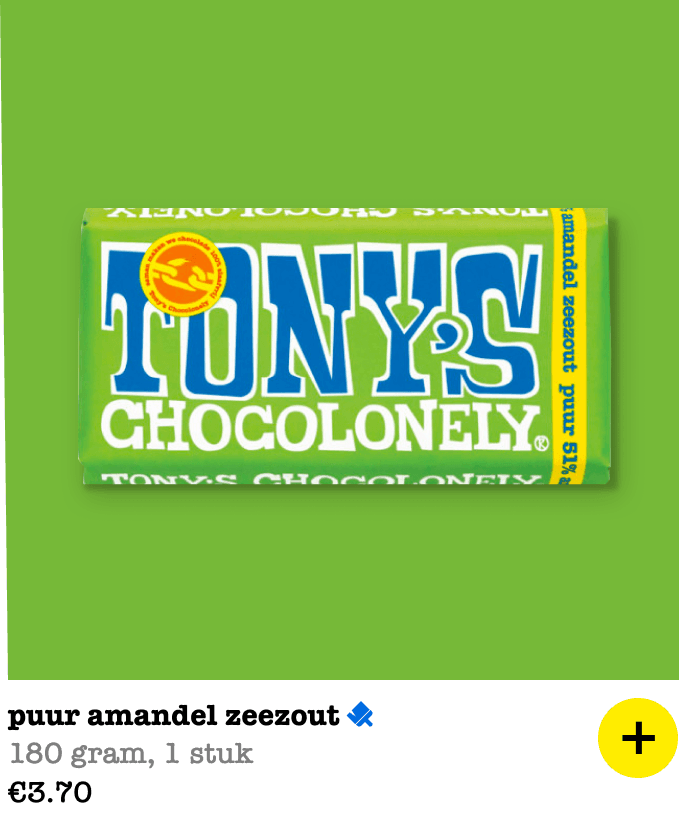
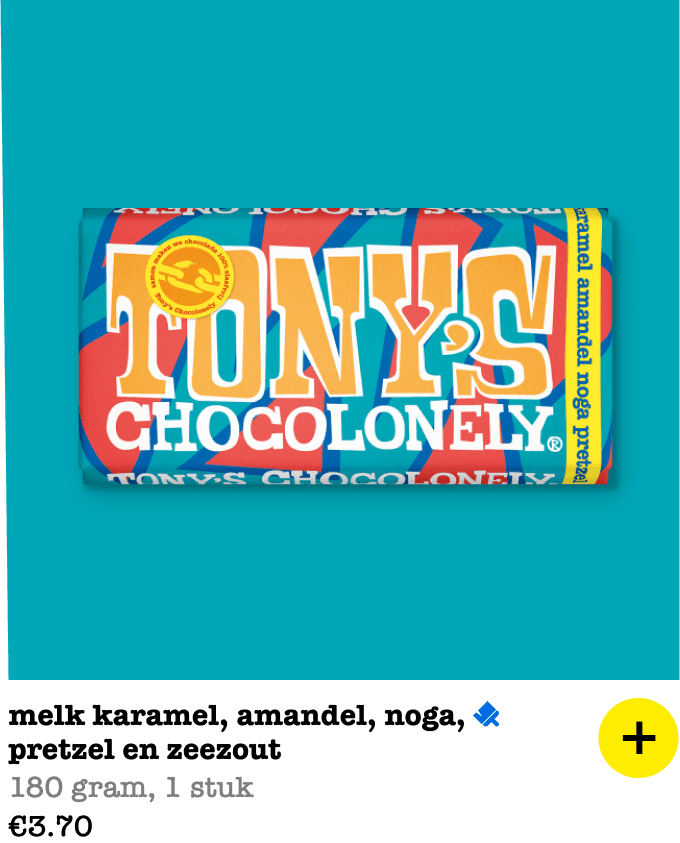
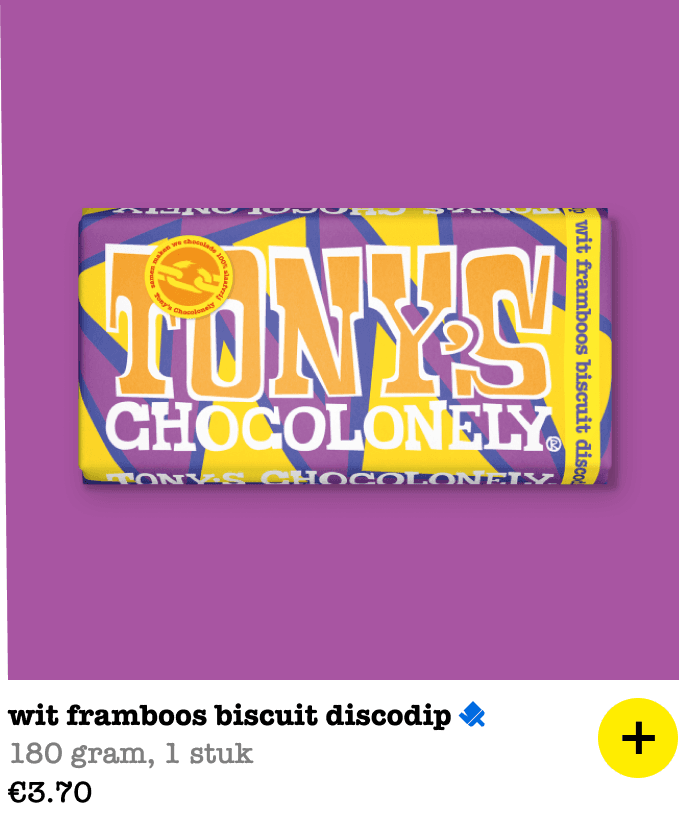
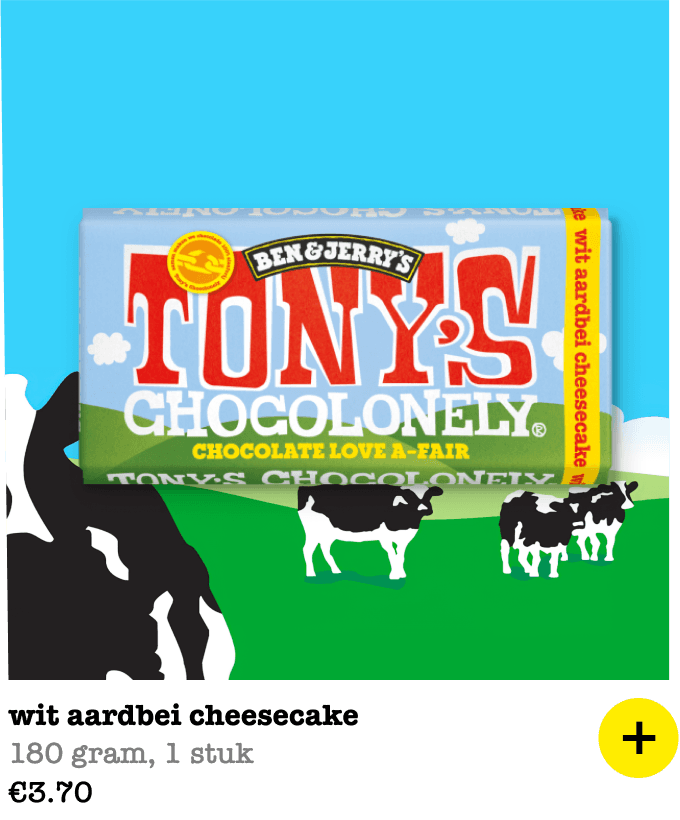
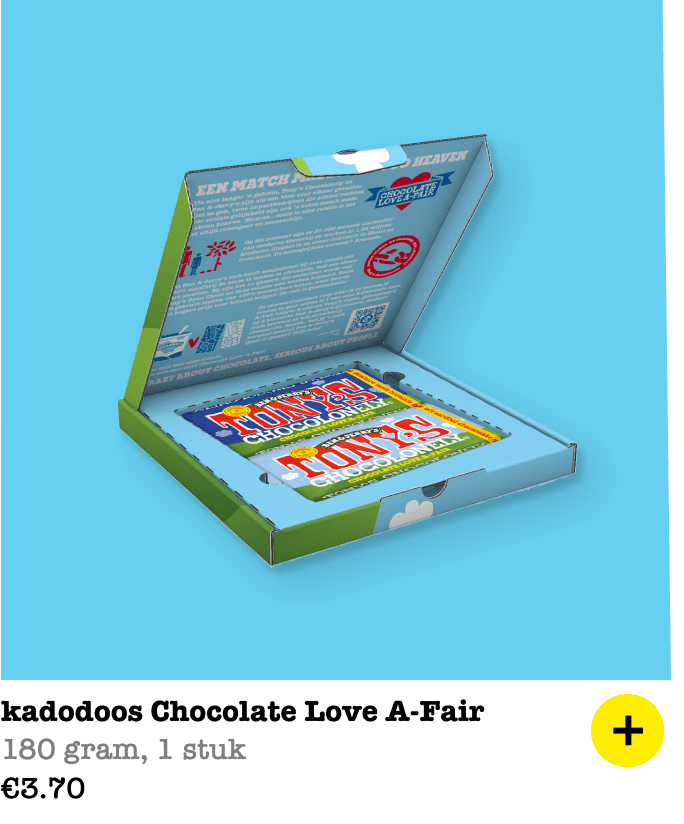
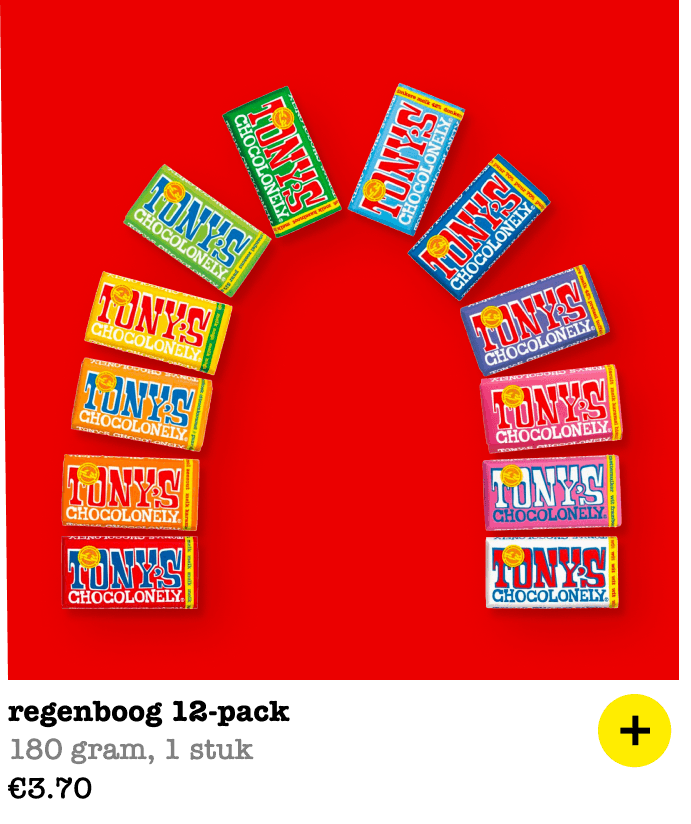
Tony's Chocolonely was founded in 2005 in Amsterdam by journalist Teun van de Keuken after he discovered the cocoa industry was riddled with modern slavery and child labour. What started as a piece of investigative journalism turned into the fastest growing chocolate brand in the Netherlands, a movement, and a business case for doing things differently in food and beverage. Today Tony's sells across Europe and the United States, partners with cocoa farmers in Ghana and Ivory Coast on long term contracts, and uses every bar as a proof point for its mission to make all chocolate 100% slave free. By 2024, the brand had a global audience, a growing product range, and an e-commerce operation that needed to grow up. The Chocoshop carried a lot of weight. It is the place where new fans meet the brand for the first time, where existing fans buy advent calendars and limited editions, where businesses order custom bars by the thousand, and where the mission gets translated into something you can actually buy. Analogue, an independent brand and digital design agency based in Amsterdam, was brought in to lead the next chapter for the digital brand. A sharper strategy, a complete UI system, and a Chocoshop built to scale with the business. Our work started with the same principle the founders have followed since day one. The brand is the product, the product is the mission, and nothing on the website should get in the way of any of those three. We mapped the Chocoshop against how people actually shop chocolate online, from quick gifting moments to bulk business orders, and rebuilt the experience around real behaviour rather than generic e-commerce templates. The UI system uses Chocoletter for editorial moments, a clean utilitarian sans for interface text, and the unequal bar as a recurring grid logic that shows up in product cards, navigation, and campaign layouts. The colour palette stays true to the bars on the shelf, with each variety owning its own space without breaking the system. Motion is used to add character, not noise. Product pages prioritize the bar itself, the story behind the cocoa, and the clearest possible path to checkout. Mission content lives next to commerce, not behind it, so the user never has to choose between buying chocolate and understanding what they are paying for. The result is a digital home that works as hard as the bar does. A Chocoshop that performs as a modern food and beverage e-commerce platform, a UI system that scales across markets and campaigns, and a brand experience that finally matches the confidence Tony's Chocolonely brings to every shelf it lands on.
Team
Julian Mollema
Ralph Tilon
Johann Schnettker
Julia Van Haaster
Project Information
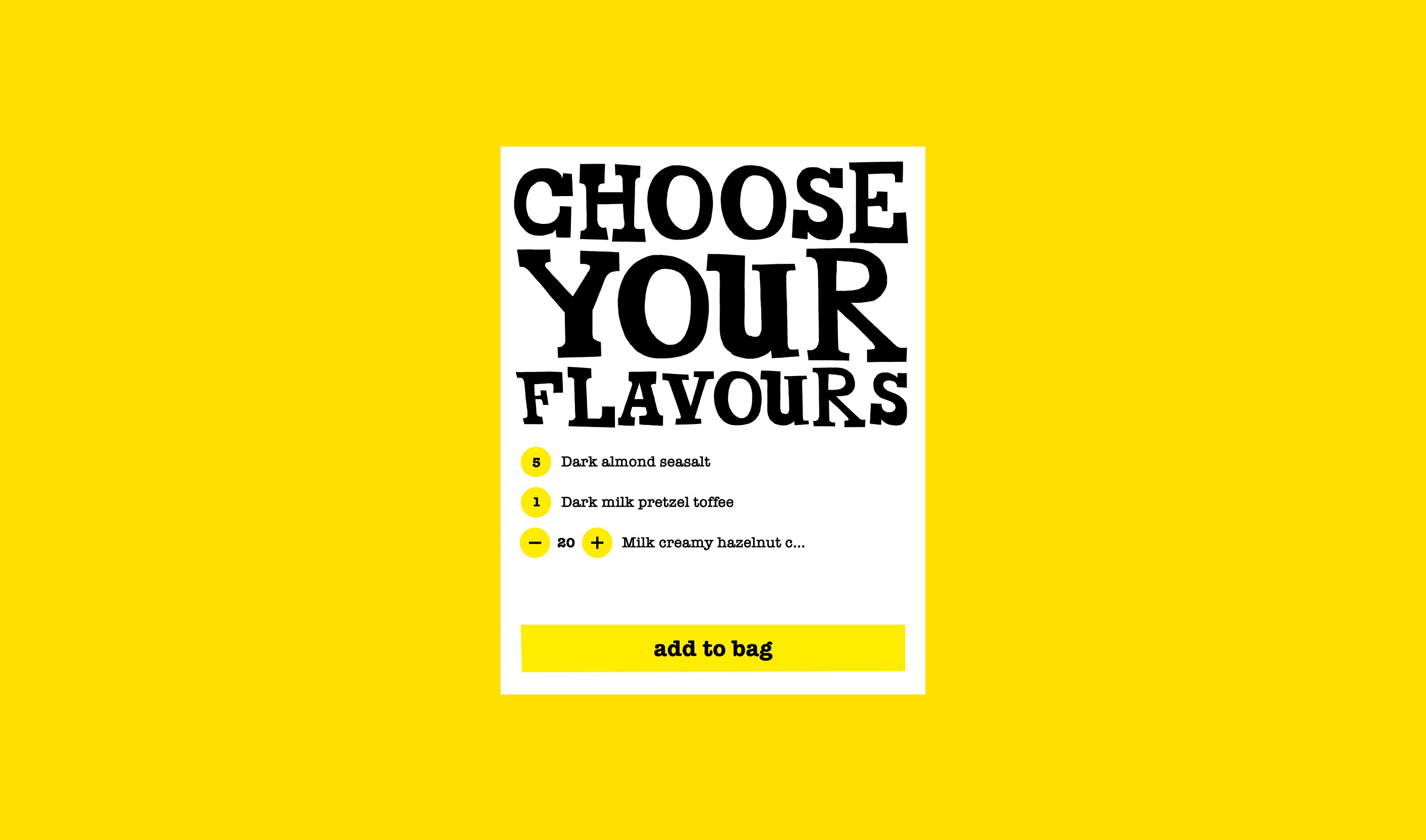
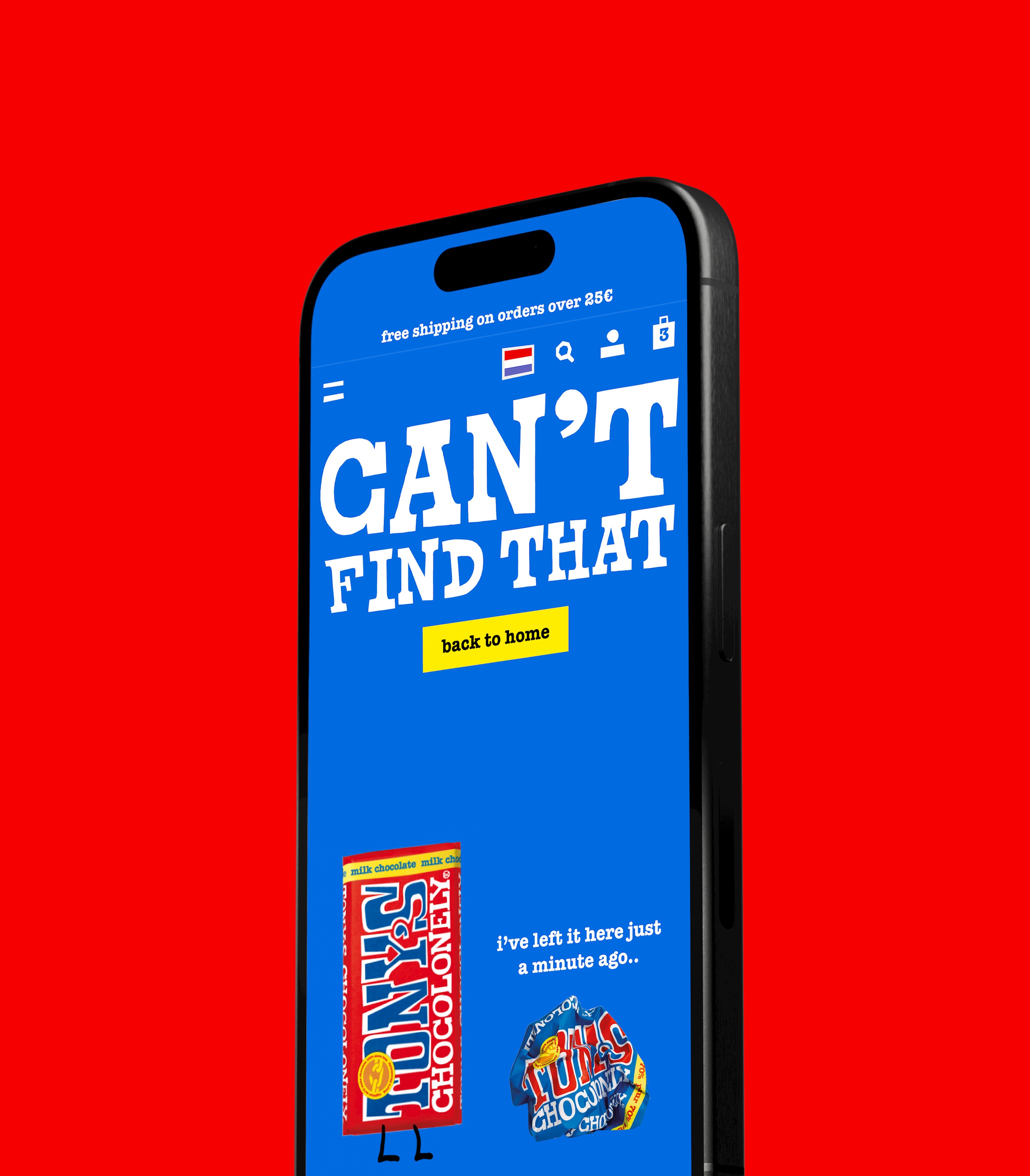
Tony's Chocolonely was founded in 2005 in Amsterdam by journalist Teun van de Keuken after he discovered the cocoa industry was riddled with modern slavery and child labour. What started as a piece of investigative journalism turned into the fastest growing chocolate brand in the Netherlands, a movement, and a business case for doing things differently in food and beverage. Today Tony's sells across Europe and the United States, partners with cocoa farmers in Ghana and Ivory Coast on long term contracts, and uses every bar as a proof point for its mission to make all chocolate 100% slave free. By 2024, the brand had a global audience, a growing product range, and an e-commerce operation that needed to grow up. The Chocoshop carried a lot of weight. It is the place where new fans meet the brand for the first time, where existing fans buy advent calendars and limited editions, where businesses order custom bars by the thousand, and where the mission gets translated into something you can actually buy. Analogue, an independent brand and digital design agency based in Amsterdam, was brought in to lead the next chapter for the digital brand. A sharper strategy, a complete UI system, and a Chocoshop built to scale with the business. Our work started with the same principle the founders have followed since day one. The brand is the product, the product is the mission, and nothing on the website should get in the way of any of those three. We mapped the Chocoshop against how people actually shop chocolate online, from quick gifting moments to bulk business orders, and rebuilt the experience around real behaviour rather than generic e-commerce templates. The UI system uses Chocoletter for editorial moments, a clean utilitarian sans for interface text, and the unequal bar as a recurring grid logic that shows up in product cards, navigation, and campaign layouts. The colour palette stays true to the bars on the shelf, with each variety owning its own space without breaking the system. Motion is used to add character, not noise. Product pages prioritize the bar itself, the story behind the cocoa, and the clearest possible path to checkout. Mission content lives next to commerce, not behind it, so the user never has to choose between buying chocolate and understanding what they are paying for. The result is a digital home that works as hard as the bar does. A Chocoshop that performs as a modern food and beverage e-commerce platform, a UI system that scales across markets and campaigns, and a brand experience that finally matches the confidence Tony's Chocolonely brings to every shelf it lands on.
Team
Julian Mollema
Ralph Tilon
Johann Schnettker
Julia Van Haaster
Project Information
Tony's Chocolonely was founded in 2005 in Amsterdam by journalist Teun van de Keuken after he discovered the cocoa industry was riddled with modern slavery and child labour. What started as a piece of investigative journalism turned into the fastest growing chocolate brand in the Netherlands, a movement, and a business case for doing things differently in food and beverage. Today Tony's sells across Europe and the United States, partners with cocoa farmers in Ghana and Ivory Coast on long term contracts, and uses every bar as a proof point for its mission to make all chocolate 100% slave free. By 2024, the brand had a global audience, a growing product range, and an e-commerce operation that needed to grow up. The Chocoshop carried a lot of weight. It is the place where new fans meet the brand for the first time, where existing fans buy advent calendars and limited editions, where businesses order custom bars by the thousand, and where the mission gets translated into something you can actually buy. Analogue, an independent brand and digital design agency based in Amsterdam, was brought in to lead the next chapter for the digital brand. A sharper strategy, a complete UI system, and a Chocoshop built to scale with the business. Our work started with the same principle the founders have followed since day one. The brand is the product, the product is the mission, and nothing on the website should get in the way of any of those three. We mapped the Chocoshop against how people actually shop chocolate online, from quick gifting moments to bulk business orders, and rebuilt the experience around real behaviour rather than generic e-commerce templates. The UI system uses Chocoletter for editorial moments, a clean utilitarian sans for interface text, and the unequal bar as a recurring grid logic that shows up in product cards, navigation, and campaign layouts. The colour palette stays true to the bars on the shelf, with each variety owning its own space without breaking the system. Motion is used to add character, not noise. Product pages prioritize the bar itself, the story behind the cocoa, and the clearest possible path to checkout. Mission content lives next to commerce, not behind it, so the user never has to choose between buying chocolate and understanding what they are paying for. The result is a digital home that works as hard as the bar does. A Chocoshop that performs as a modern food and beverage e-commerce platform, a UI system that scales across markets and campaigns, and a brand experience that finally matches the confidence Tony's Chocolonely brings to every shelf it lands on.
Work with us
Prepare yourself for the future of e-commerce

Contact ralph











Work with us
Prepare yourself for the future of e-commerce
Contact ralph
Work with us
Prepare yourself for the future of e-commerce
Contact ralph

© Analogue 2026
